





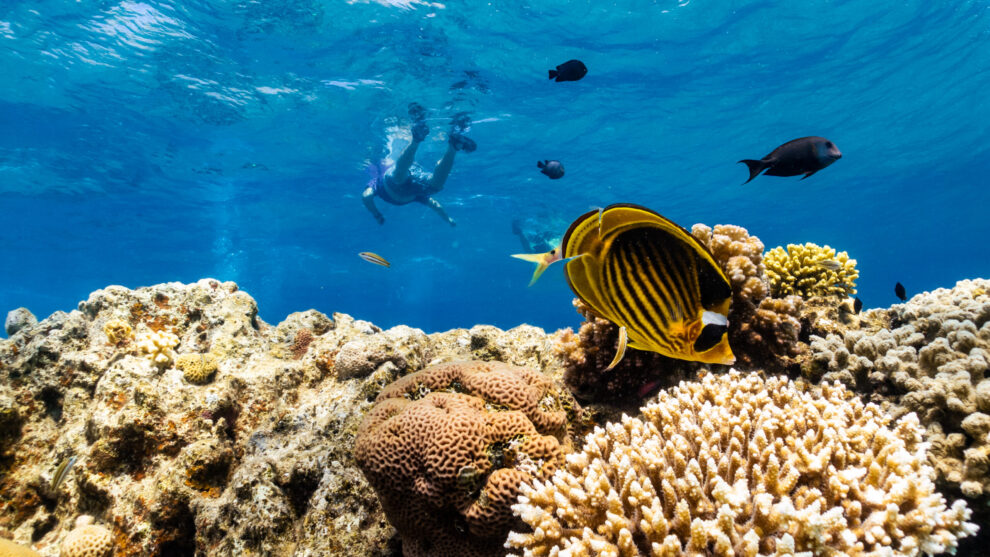
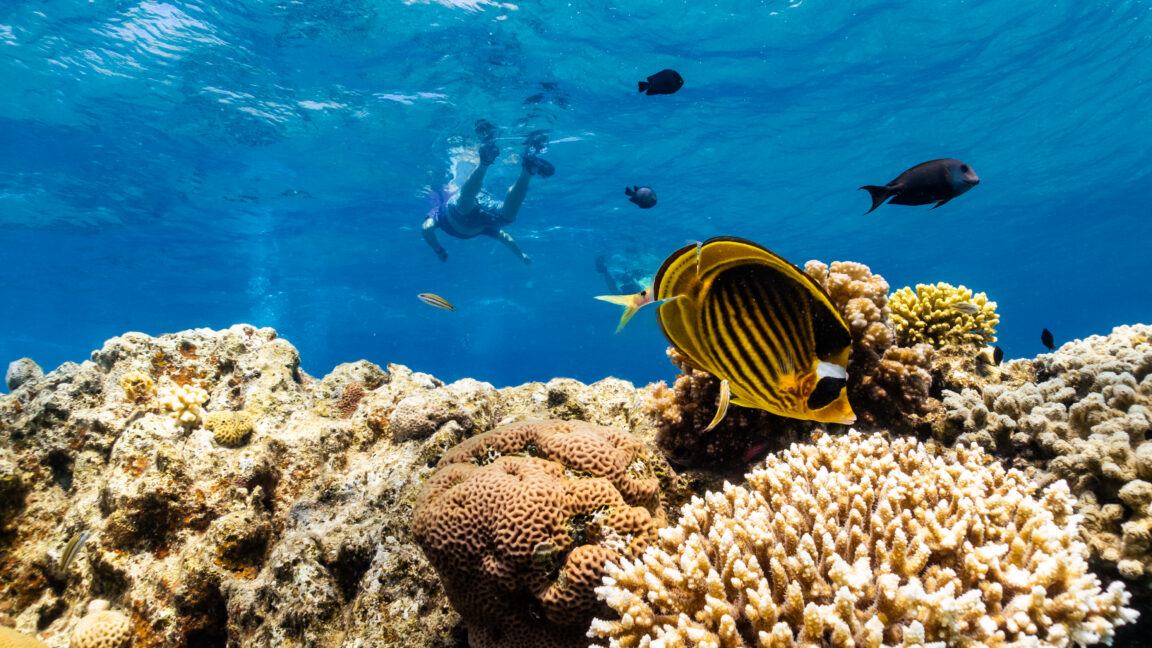
Coral larvae can drift hundreds of miles from their parents before settling on a reef for the rest of their lives.
It was an ambitious idea, she said, that would require political support and significant financial backing—about $10 million by her estimate—as well as community buy-in. Not every super reef can be cordoned off to fishing and other activities, she said.
“People need to live. People need to eat. They need to fish.” It would be critical, she said, to consult with and co-design any protected areas in this corridor with communities that would be impacted, as is being done in Laura.
But overall, the idea seemed feasible, the Marshall Islands Marine Resources Authority’s Edwards said. “The idea of creating a multi-national network of marine-protected areas connecting resilient reefs across the Marshall Islands, Kiribati, and Tuvalu is a very promising concept,” she said.
Other experts agree. “Protecting source reefs and well-placed stepping stones between them can maintain dispersal networks that can share heat-tolerant adaptations and provide new coral larvae to help degraded reefs recover,” said Emily Darling, director of coral reefs at the Wildlife Conservation Society. “Accounting for connectivity between high-integrity, climate-resilient reefs multiplies their conservation value across an entire region.”
Once established, Cohen said, this first Super Reef corridor could serve as a proof of concept for creating similar protected networks around the globe.
Future corridors might be created between Indonesia, the Philippines, and Malaysia, she said, or India, the Maldives, and the Chagos Islands in the Indian Ocean.
Ultimately, she said, the success of these networks would depend on countries’ willingness to collaborate and select which reefs they would prioritize. Her role, as she sees it, is to deliver the scientific data to inform those choices. She wants to ensure that resources are directed where they can have the greatest impact—as quickly as possible.
“This is an urgent mission,” she said.
Forecasters recently warned that El Niño conditions have formed once again in the tropical Pacific and are expected to strengthen by this fall.
In the coming months, Cohen said, “We have a pretty strong chance of having a heat wave in the Marshall Islands.” She was already having nightmares of it ravaging the vibrant reefs she’d just visited.
“It’s just a horrible feeling,” she said, gazing out toward a shallow reef offshore Bokanbotin.
But she wanted to be there when it hit. She had already started to plan her return trip to the Marshall Islands before she left.
“We want to be there in the peak of that heat wave to send Yellowfin out and see how the corals are doing,” she said. “I have a pretty good idea which corals will resist because we’ve seen them do it before. But we need to make sure.”
This article originally appeared on Inside Climate News, a nonprofit, non-partisan news organization that covers climate, energy, and the environment. Sign up for their newsletter here.



Add Comment